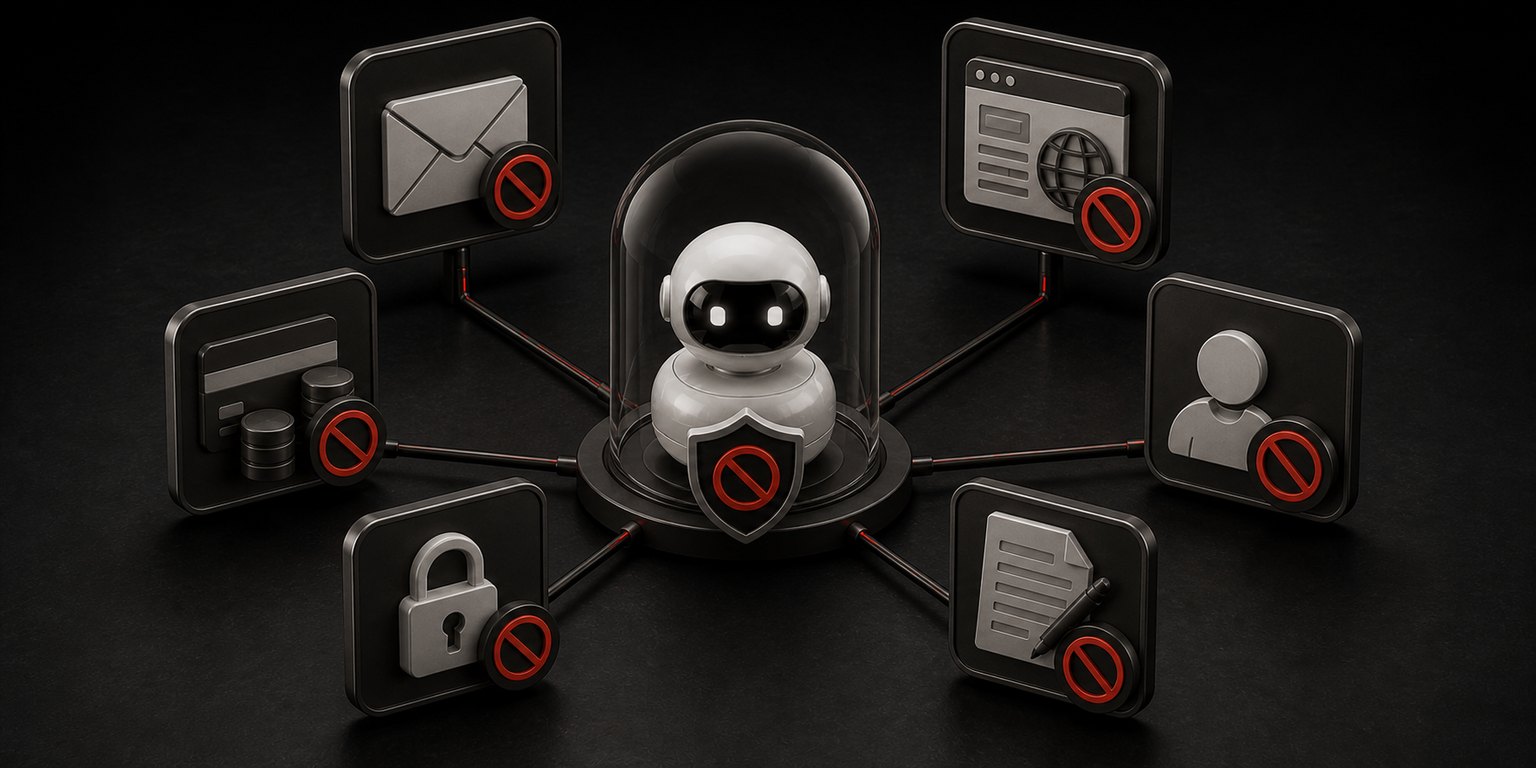
Most of the disappointment with AI in customer service comes from expecting the wrong things. Not from the technology failing at what it is good at, but from being pointed at work it was never going to handle.
So here is the list of what these things cannot do. We build them for a living, and this list is the reason our projects go well when they go well.
It cannot know what nobody wrote down
An agent knows what it has been given. If the answer to a common question lives only in the head of the person who has worked there eleven years, the agent does not have it and will not get it.
This is the single most common reason a project stalls. Not the technology. The fact that half of what the company knows was never written anywhere.
It cannot be trusted with a decision that costs money
Approving a refund, granting an exception, promising a delivery date, quoting a price on something non-standard. An agent can prepare all of these and hand them to a person. It should not be the one deciding.
Not because it is incapable of producing an answer. Because when it is wrong, it is wrong confidently, and the cost lands on you rather than on it.
The right pattern is narrow: the agent handles anything with a defined answer, and everything that requires judgement gets handed to a human with the context already assembled.
It cannot tell you when it is wrong
This is the property people find hardest to accept. A wrong answer and a right answer come out with exactly the same tone of confidence. There is no wobble in the voice.
Which means you cannot rely on the agent to flag its own mistakes. You need something outside it: rules about what it must never answer, a person watching the first weeks, and a way for customers to reach a human in one step.
It cannot replace the person who knows the customer
An agent has no relationship with anyone. It does not remember that this particular customer has had a bad month, that this order matters more than the others, that this person just needs someone to tell them it will be fine.
For the twenty questions that arrive every day and have the same answer every day, none of that matters. For the conversation that decides whether someone stays a customer, all of it does.
It cannot fix a broken process
If people write to you because your delivery times are unclear, an agent will now explain your unclear delivery times faster. The volume of questions does not fall. It gets served more efficiently.
This is worth checking before you build anything. Go through the last two hundred messages and sort them into two piles: questions that exist because information is missing, and questions that exist because something in the business is not working. The second pile is not an AI project.
What it does well
Having said all that, the list of what it does handle is not small:
- The same forty questions, asked every week, answered instantly at any hour.
- Reading a long thread and summarising it for whoever picks it up.
- Looking things up in your own systems, if it is allowed to.
- Answering in the customer's language without you hiring for it.
- Handing over cleanly, with the context, instead of making people repeat themselves.
That is a genuinely useful employee for the repetitive half of the job. It is not a replacement for the half that requires a person, and any provider telling you otherwise has an incentive you should think about.
We will tell you if it is not worth building
Part of what we do is going through your real messages first and saying which ones an agent should never touch.